


Brightening / Melasma / Redness / Dark SpotsLaser Toning, Clearer Skin Tone

Laser Toning, Clearer Skin Tone
Laser toning is a procedure that uses a 1064nm wavelength to manage pigments within the skin. It can be applied to various pigmentation concerns such as melasma, lentigines, freckles, ABNOM, and dark circles, and you can expect clear and even skin tone improvement. The burden on daily life after the procedure is relatively low, and pain and recovery processes may vary individually. *VAT included
Options
Treatment Details
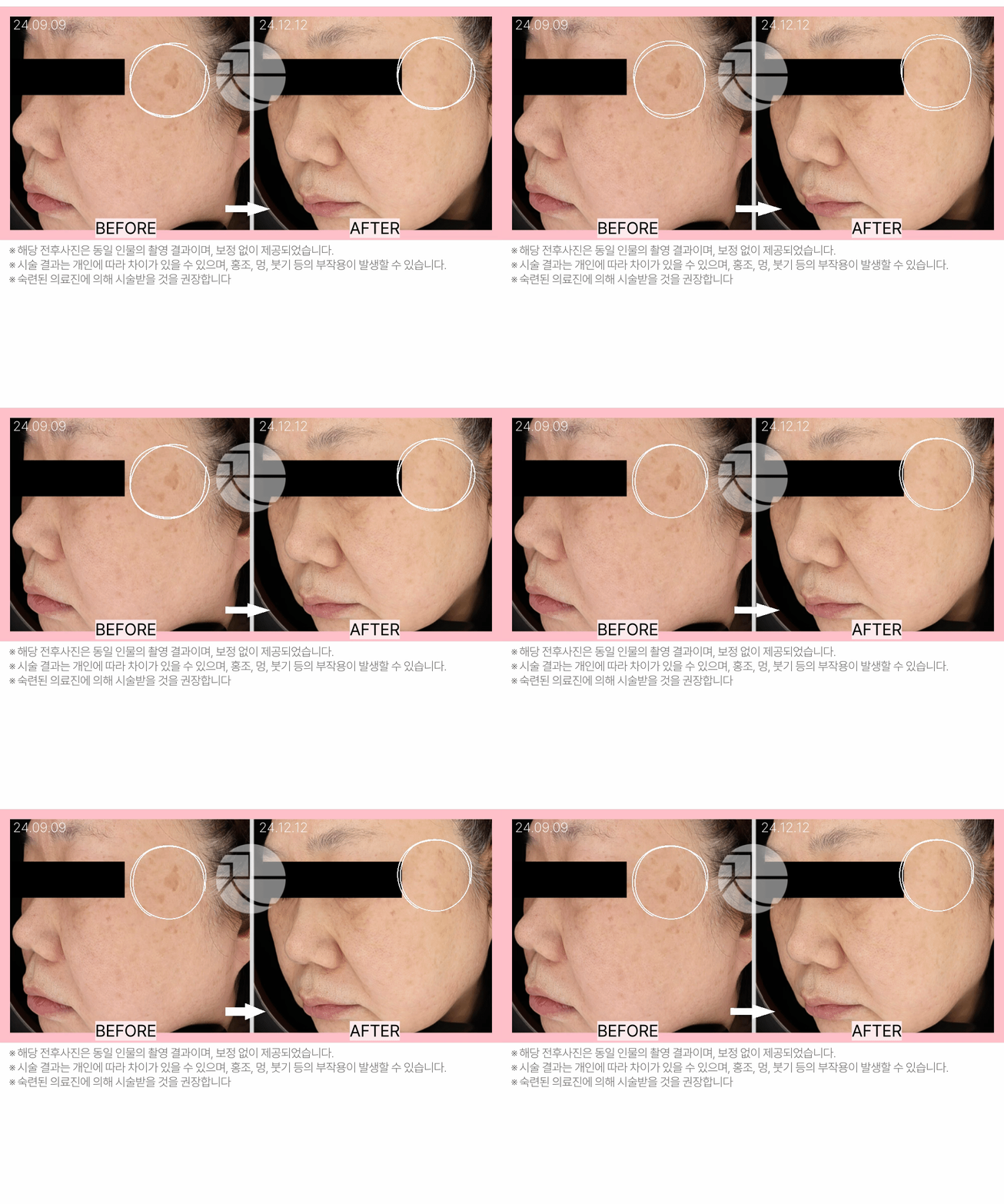



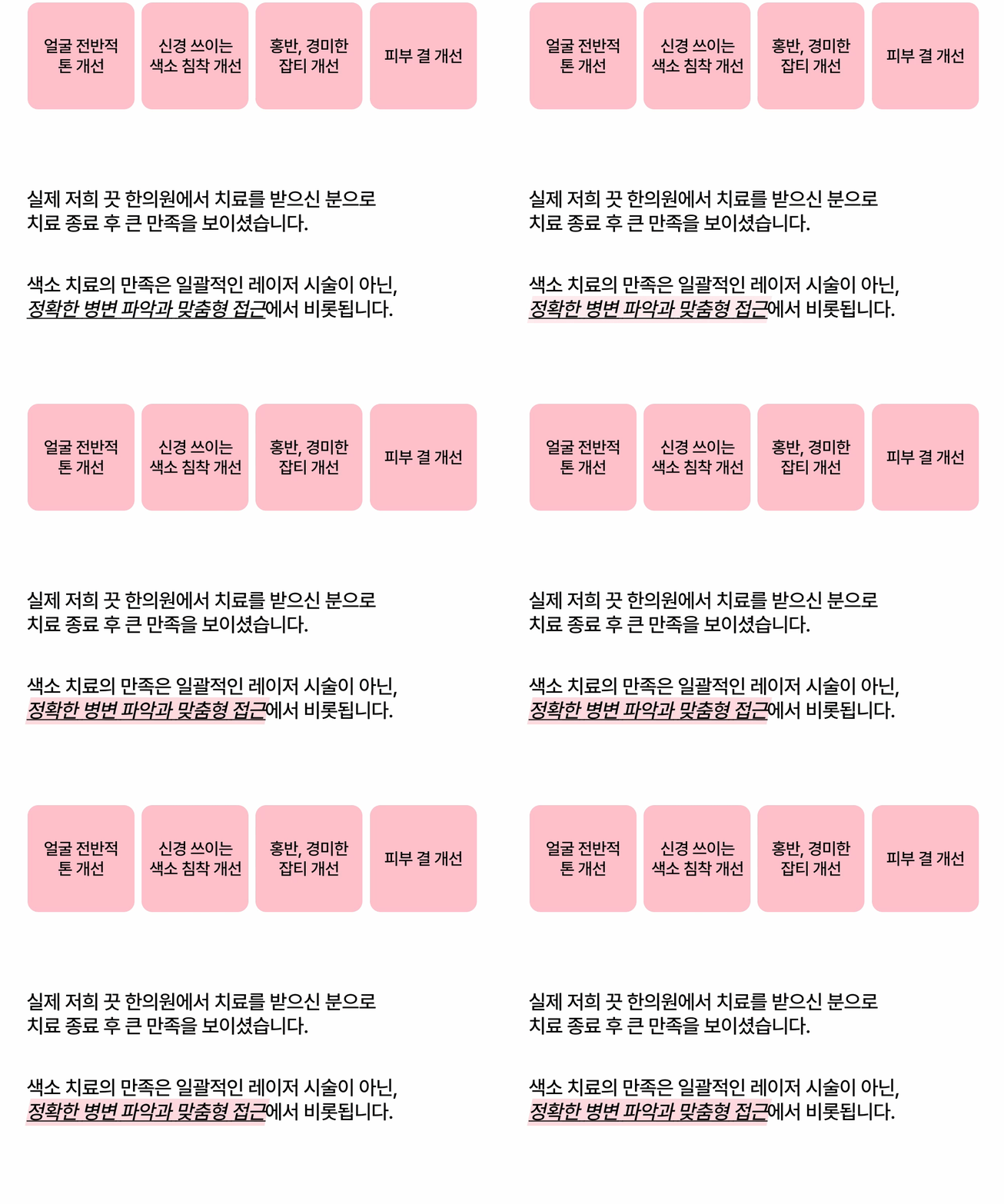


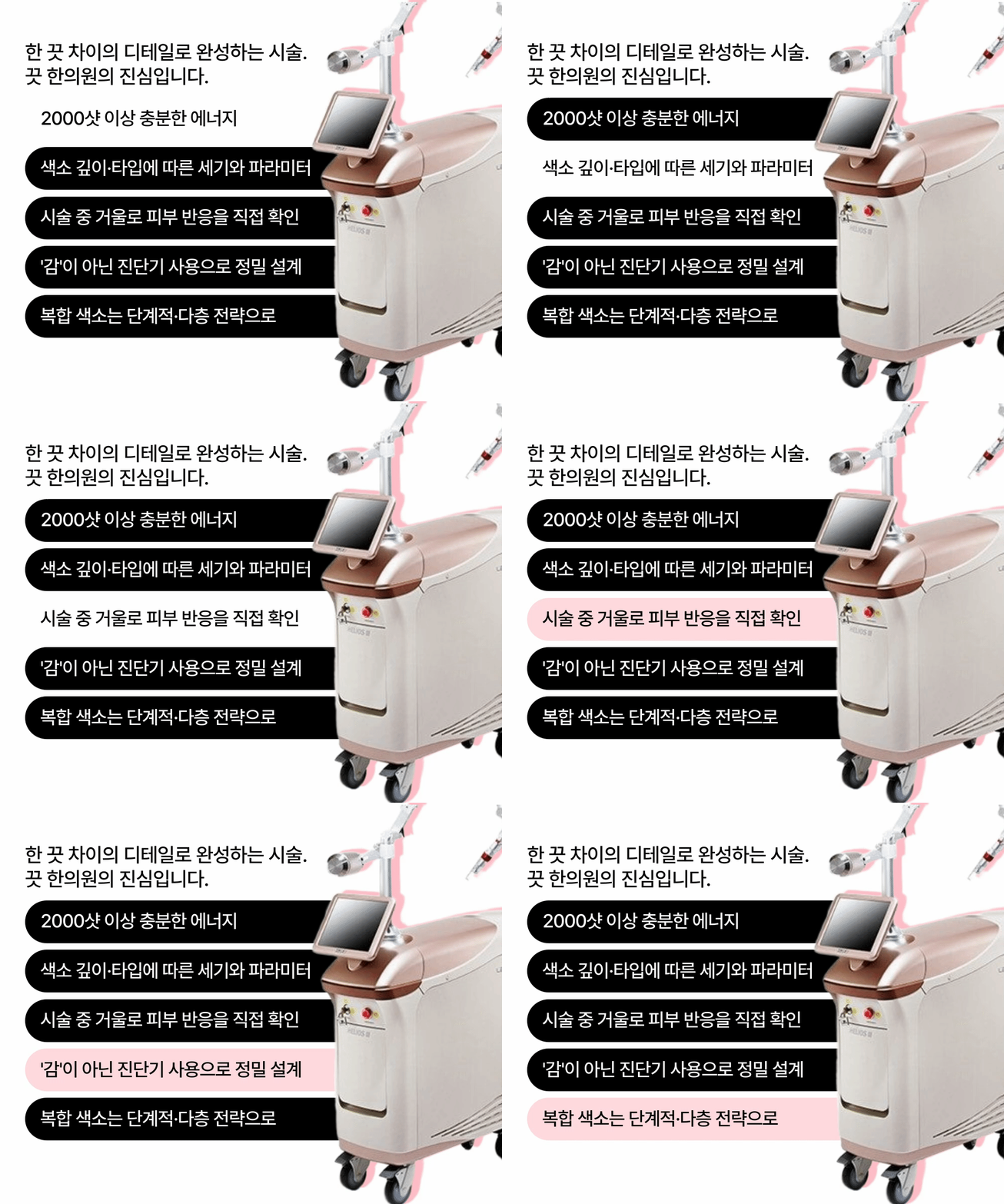



Differences in Laser Toning at Kkeut TKM Clinic
- 1. '2000 shots or more' sufficient energy guaranteed; procedures are not performed quickly with low output and low shot counts. Kkeut TKM Clinic precisely delivers 2000 shots or more of sufficient energy to maximize effectiveness and minimize irritation.
- 2. Custom intensity adjustment by the director based on 'pigmentation depth and type'. All types of pigmentation, such as melasma, ABNOM (Acquired Bilateral Nevus of Ota-like Macules), and blemishes, have different depths and characteristics. Kkeut TKM Clinic applies a weaker intensity for melasma, a stronger intensity for ABNOM, and different intensities and parameters for each area in cases of complex pigmentation.
- 3. 'Mirror check + real-time parameter adjustment' during the procedure. It's not just about shooting the laser and finishing. During the procedure, the director personally checks the skin's reaction using a mirror and, if necessary, changes the spot size, intensity, and even the handpiece. Through precisely designed 1:1 customized procedures, we aim for actual treatment, not just 'toning' in name.
- 4. Use of Mark-Vu diagnostic device → precise diagnosis of pigmentation location and depth. Diagnosis is not done by intuition. With the Mark-Vu diagnostic device, we check the type, distribution, and depth of pigmentation and incorporate these results into the procedure design.
- 5. Multi-layered approach for complex pigmentation. If melasma and ABNOM are mixed, treating only one aggressively can worsen the condition. Kkeut TKM Clinic first stably calms the melasma, and then employs a strategy of strongly targeting the dermal ABNOM.
Why is Laser Toning at Kkeut TKM Clinic Special?
Laser toning is widely used for treating pigmented lesions, but the results can vary significantly depending on the machine used, the number of shots, and the intensity of the procedure.
Various pigmented conditions such as melasma, freckles, and ABNOM (Acquired Bilateral Nevus of Ota-like Macules) require precise procedure design because they exhibit different depths and tissue responses.
1. Minimum of 2,000 shots or more, ensuring sufficient energy.
Most studies report that the safest and most effective treatment with low-output laser toning is achieved between 1500 and 2500 shots.
Kkeut TKM Clinic fundamentally guarantees 2,000 shots or more and designs treatments to provide sufficient therapeutic effects without irritating the skin.
Simply operating a machine does not guarantee skin change.
Custom adjustments to the number of shots, output, irradiation speed, and spot size must be made according to the depth of pigmentation, spread, and skin sensitivity.
2. Director's custom toning adjustment per condition.
1) Melasma
Melasma is a typical bilateral pigmented condition that spreads across the face.
Since the 'melanocytes' that produce melanin pigment are overactive, there is a risk of worsening the condition if irritated.
Kkeut TKM Clinic precisely identifies the extent and depth of melasma using a Mark-Vu skin diagnostic device and begins treatment with a toning laser that has a short pulse duration of 5 nanoseconds.
Kkeut TKM Clinic's toning method minimizes side effects by not stimulating the melanocytes themselves, but selectively destroying only the melanosomes within the cells.
During the procedure, the director personally uses a mirror to adjust the intensity and focus areas, meticulously fine-tuning handpiece changes or parameter settings to ensure no area is missed.
Before, during, and after the procedure, we check the skin together using a mirror.
2) ABNOM (Acquired Bilateral Nevus of Ota-like Macules)
It is a condition located in the dermal layer of pigmentation, similar to melasma, but requires a stronger intensity than melasma.
In complex cases where melasma and ABNOM coexist, technical procedural expertise is crucial as opposing strategies are simultaneously required: weaker for melasma and stronger for ABNOM.
Specifically, if strong treatment is initiated without first treating melasma, it can exacerbate the melasma.
At Kkeut TKM Clinic, through thorough pre-procedure differentiation and customized treatment planning, we minimize side effects and adjust the intensity to treat ABNOM concurrently.
For ABNOM procedures, after differentiation with Mark-Vu, the director's customized parameter settings are applied, and spot size, repetition count, and output are meticulously adjusted according to skin type.
3) Other Pigmented Conditions
Pigmentations that react relatively quickly, such as lentigines, freckles, and blemishes, are easily improved if the wavelength is well matched, but treatment becomes challenging when they coexist with melasma or ABNOM.
In these cases, too, a delicate customized strategy is required, including accurate differentiation, mirror checks during each procedure, output adjustment, and laser handpiece changes. At Kkeut TKM Clinic, unlike conventional standardized laser toning, it is more accurate to view it as the director's customized melanin pigmentation treatment, despite its name.
Picotoning vs. Laser Toning
Picotoning has the theoretical advantage of destroying pigment more finely with short laser pulses in picosecond units.
In contrast, laser toning delivers energy over a slightly longer duration in nanosecond units.
Both toning methods selectively destroy melanin pigment to brighten skin tone and are used to treat pigmented conditions such as melasma, freckles, and ABNOM (Acquired Bilateral Nevus of Ota-like Macules).
Due to the difference in irradiation time, picotoning may show a faster response speed in the initial 2-3 sessions, but both methods show similar whitening effects in cumulative treatments of 10 sessions or more.
Laser toning is a method proven for nearly 20 years, and it can be a more stable choice, especially for sensitive skin or conditions sensitive to irritation like melasma.
Because picotoning delivers strong energy in a short time, temporary redness or stinging may occur in some cases.
Clinically, when compared using the same 1064nm wavelength, numerous results have been reported showing no significant difference between the two methods in terms of skin brightening, reduction in melasma scores, and decrease in melanin index.
Ultimately, to achieve the same effects with laser toning as with picotoning?
Repeated treatments 10 times or more: Cumulative treatment is key.
Appropriate energy intensity: Adjust within the range of 1.0~2.0 J/cm² according to skin response.
Sufficient shot count: A minimum of 2000 shots or more is required.
Maintain 1-2 week intervals: If treatment intervals are too long, the cumulative effect may decrease.
Custom design: It is important to receive treatment from a practitioner who can make real-time adjustments according to your skin type and reaction.
If these conditions are met, a synthesis of various studies shows no difference compared to Pico Toning.
All the above content used research papers as references.
Medicina (Kaunas), 2022, Lasers in Medical Science, 2021, Journal of Cosmetic and Laser Therapy, 2021, etc.
What is Laser Toning?
Laser Toning is a procedure that repeatedly irradiates low-power laser energy deep into the skin, gradually breaking down pigments and evening out skin tone.
Unlike high-power treatments that simply burn away pigments, it gently breaks down melanin by accumulating subtle stimulation and promotes skin regeneration.
It is a widely applicable treatment for various pigmentary disorders such as melasma, freckles, and ABNOM (Acquired Bilateral Nevus of Ota-like Macules), without irritating the skin, and is currently one of the most commonly used pigment treatments.
1. Type of laser used: Q-switched Nd:YAG
Q-switched Nd:YAG lasers are used for laser toning.
The 1064nm wavelength of this laser can reach the upper dermis where melanin pigment is mainly distributed, and has the advantage of selectively destroying pigments without damaging the skin surface.
It focuses on pigment removal while preserving the skin barrier, making it safe for use on sensitive or thin skin.
2. Low output, high-frequency 'tone-up' stimulation
While traditional pigment treatments remove pigments with a strong laser in one go, laser toning repeatedly irradiates low-energy lasers thousands of times.
This method minimizes skin tissue damage, gradually breaks down melanin particles, and then induces the body's immune system (macrophages) to absorb and remove them.
As a result, the skin tone gradually becomes more even and clear.
3. Dendrite destruction + Melanin removal within melanocytes
Laser toning not only breaks down pigments but also plays a role in suppressing the melanin production pathway itself.
The core of this is the destruction of melanocyte dendrites.
Dendrites are pathways that transport mature melanosomes (melanin carriers) produced by melanocytes to the outer skin, i.e., the epidermis.
If the laser severs these dendrites, melanin carriers cannot exit the skin, and as a result, pigments cannot form on the skin surface.
Furthermore, it can directly destroy melanin pigments accumulated within melanocytes, making it effective in treating existing hyperpigmentation.
This action is only possible with lasers having short pulse durations, measured in 'nanoseconds' or 'picoseconds'.
In other words, it is a key mechanism observed only in treatments like laser toning or pico toning.
Three Key Points of Laser Toning
Three Core Treatment Principles of Laser Toning
Laser toning goes beyond simple pigment removal; it is a treatment that regulates the entire process of melanin production and transport.
1. Removal of existing pigment particles
For pigmentary disorders other than melasma (such as freckles, ABNOM, etc.), melanin is removed with strong parameter settings to achieve improvement.
However, since melasma is sensitive to stimulation, careful adjustment is necessary, and care must be taken not to further activate melanocytes with irritation.
2. Inhibition of melanosome transport by destroying dendrites
It prevents melanosomes produced by pigment cells from migrating to the epidermal layer, thereby blocking hyperpigmentation in advance.
3. Direct destruction of melanin within melanocytes
The laser directly breaks down melanin pigment present inside melanocytes, reducing melanin concentration and inducing a tone-up effect.
Laser Toning Effects
- 1. Tone-up effect that brightens skin tone: Subtle laser stimulation gently breaks down melanin, naturally clarifying dull skin.
- 2. Alleviation of Melasma and Hyperpigmentation By selectively destroying only melanosomes without stimulating melanin cells, even sensitive melasma can be treated stably.
- 3. Improvement of ABNOM (Acquired Bilateral Nevus of Ota-like Macules) Treats dermal pigmentation safely, even reaching deeper pigments than melasma, with customized intensity.
- 4. Blocking Pigment Production to Reduce Recurrence Concerns By destroying the dendritic sheath, which is the pathway for pigment, it prevents melanin from emerging and suppresses pigment regeneration itself.
- 5. Smooth Skin Texture with Improved Fine Lines and Texture Laser stimulation promotes skin regeneration, leading to the additional benefits of refined texture and softened fine lines.
- 6. Minimum Stimulation, Maximum Effect The method of repeatedly irradiating with low output minimizes skin irritation, making it suitable for even sensitive skin.
Recommended for Laser Toning
- 1. Those concerned about dull and uneven skin tone
- 2. Those experiencing recurring and darkening melasma, blemishes, and freckles
- 3. Those with dermal pigmentation such as ABNOM (Acquired Bilateral Nevus of Ota-like Macules)
- 4. Those with thin and sensitive skin who wish to receive pigment treatment
- 5. Those who also desire improvement in fine lines and skin texture
- 6. Those who need consistent skin improvement while minimizing irritation
Laser Toning Procedure Steps
- STEP 1. Mark-Vu Precise Skin Diagnosis, confirming the depth and extent of pigmentation that cannot be determined by simply looking at the skin surface.
- STEP 2. 1:1 Direct Consultation with the Director and Treatment Plan Setup
- STEP 3. Customized Parameter Setting and Laser Toning Procedure (Re-check with the director in the mirror before the procedure)
- STEP 4. Mirror Check during Procedure and Re-check of Focused Areas
- STEP 5. Mirror Check After Procedure and Progress Guidance
A Message from Our Head Doctor
Whether it's melasma or ABNOM, many patients have suffered for a long time due to a single type of pigmentation.
You likely also have many anxieties, such as 'Can this get better?' or 'What if it gets even darker?'
That's why, when it comes to pigment treatment, we ensure it's not just a procedure where 'only the machine operates',
but rather, we prioritize visually inspecting each area of the skin and precisely treating only what is truly necessary.
Pigmentation requires a completely different approach depending on skin depth and sensitivity.
Laser toning has been set up not as a haphazard procedure, but as a system designed to deliver effective results. We will do our best to ensure you see improvement.
Post-Procedure Precautions
- ㆍWashing your face/applying makeup is possible on the day of the procedure, and we recommend paying close attention to sun protection.
- ㆍWe recommend paying extra attention to soothing and moisturizing temporarily irritated skin.
- ㆍSwelling or redness may occur after the procedure; this will naturally subside over time, so please do not worry. If it persists for several days, we advise you to visit the clinic.
진료 진행 절차
첫 상담부터 마무리까지의 실제 진행 순서를 확인하세요.
- 01
피부 표면을 부드럽게 세안합니다.
- 02
마크뷰(Mark-Vu)와 같은 정밀 진단 기기를 통해 피부 상태를 상세히 파악합니다.
- 03
환자 개개인의 피부 특성에 맞춰 맞춤형 상담을 진행합니다.
- 04
피부 타입에 적합한 레이저 토닝 시술 값을 설정한 뒤, 조심스럽게 시술을 시작합니다.
- 05
시술 받은 부위를 편안하게 진정시키고, 마무리 관리를 해드립니다.
시술 기본정보
시술 시간, 마취, 회복, 유지기간을 한 번에 확인하세요.
TIME
20~30분 이내
ANESTHESIA
마취 없음
RECOVERY
일상생활 바로가능
Q&A
고객님들이 가장 많이 물어보시는 내용을 모았습니다.
What are the recommended frequency and number of sessions for toning?

We generally recommend receiving at least 10 sessions, with procedures done every 1-2 weeks.
Can acne appear after toning treatment?
After toning treatment, those with active sebaceous glands may temporarily experience acne. If this symptom occurs, it will naturally subside over time, so there's no need to worry too much. However, please be careful not to irritate your skin and ensure adequate moisture. If you still feel uncomfortable after observing for about a week, we can assist you with a follow-up visit to check your progress.
Is Pico Toning really more effective than Nano Toning?
Although the irradiation time is shorter, the actual clinical effects are not significantly different.