


Laser Tattoo Removal[Semi-Permanent Reset] Eyebrow Tattoo Removal
![[Semi-Permanent Reset] Eyebrow Tattoo Removal](/_next/image?url=https%3A%2F%2Ffirebasestorage.googleapis.com%2Fv0%2Fb%2Fkkeutguro-7e583.firebasestorage.app%2Fo%2Fproducts%252Fguro%252Fen%252F1758873276552_20dc2f6d-7026-4f97-b018-741967fb4465_ghfj.webp%3Falt%3Dmedia%26token%3D1551abf1-d5d2-4404-bfdb-2443e48498b6&w=2048&q=75)
[Semi-Permanent Reset] Eyebrow Tattoo Removal
If your eyebrow tattoo color has changed or you don't like its shape, you can clean up the existing pigment and plan a new design. *VAT separate
Options
Treatment Details

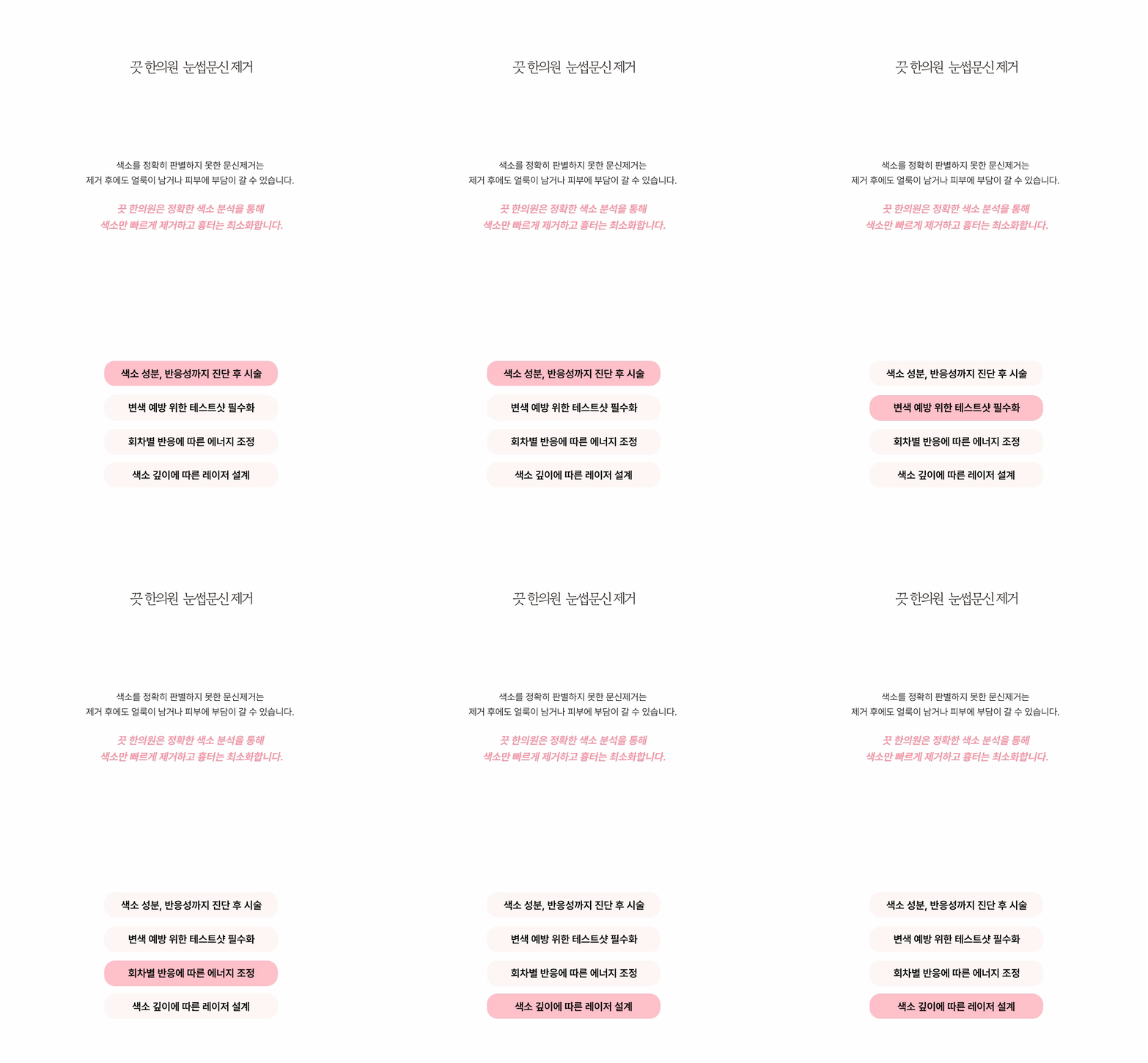
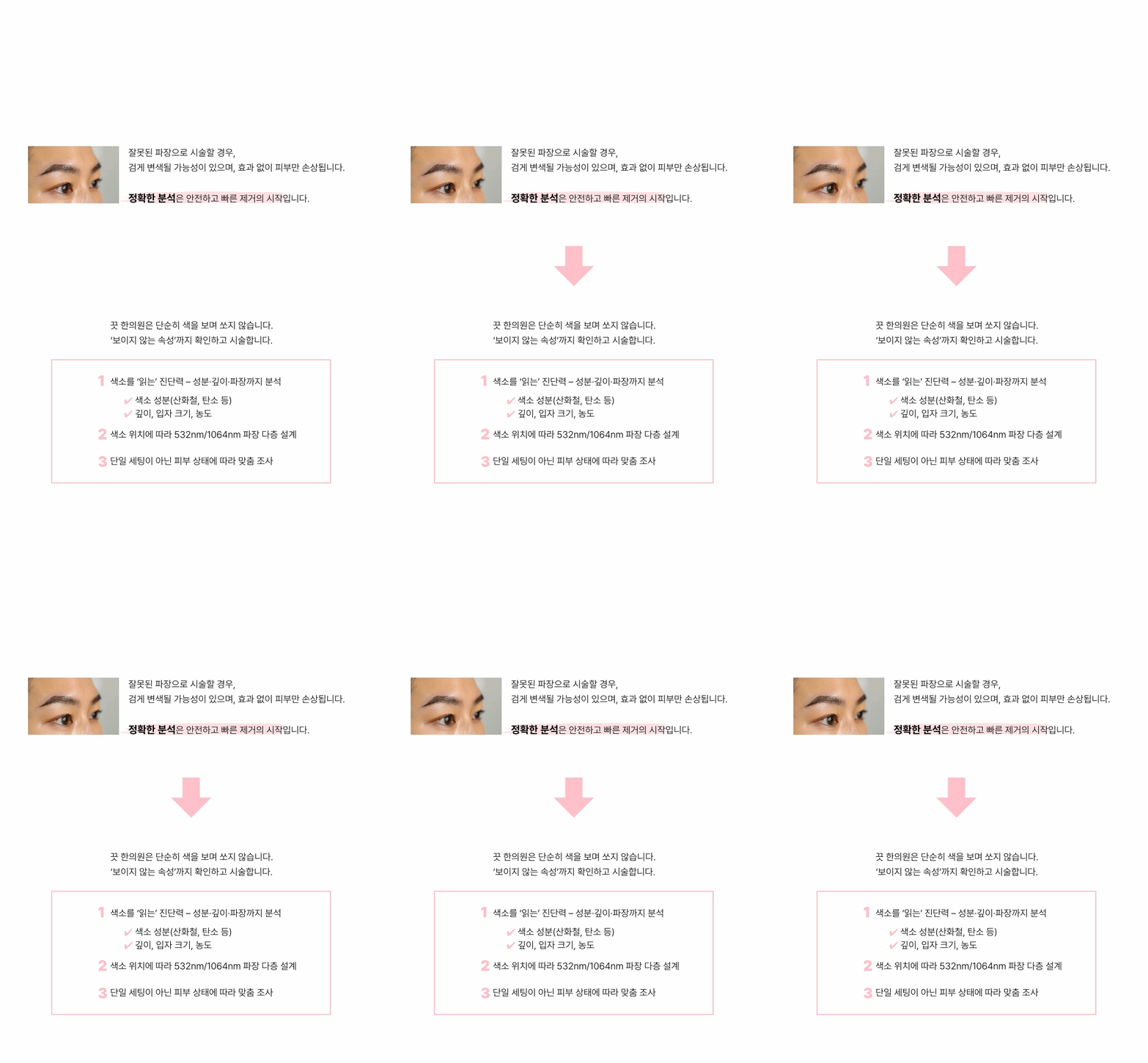
Kkeut Clinic Eyebrow Tattoo Removal Differentiators
1. Pigment Analysis-Based Diagnosis
We don't just target based on color; we analyze the pigment's composition, location, and concentration.
2. Mandatory Test Shots
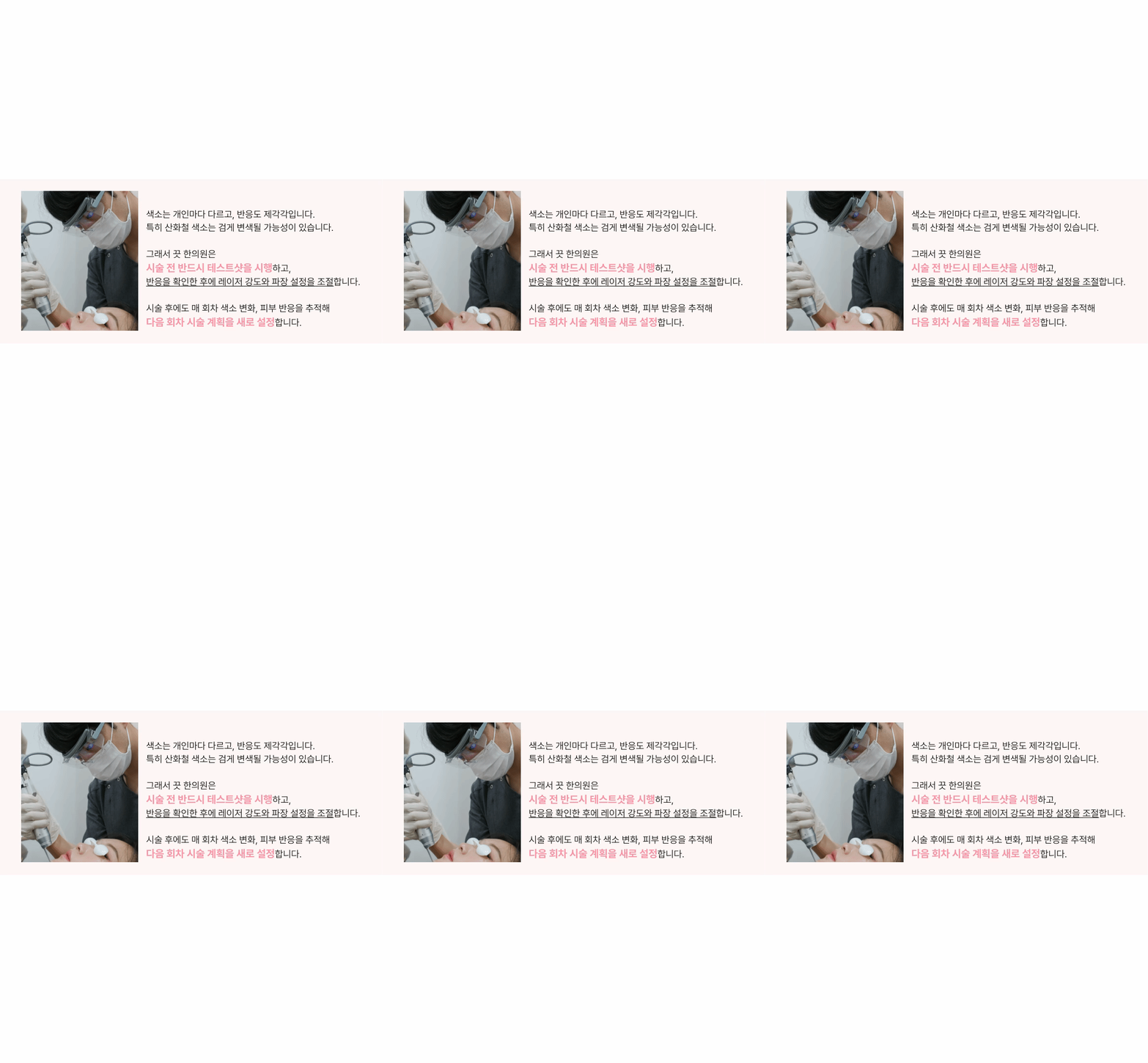
To prevent discoloration, we perform test shots before treatment to check pigment reaction.
3. Session-Specific Planning
We track responses after each treatment to meticulously adjust the plan for the next session.
4. Customized Laser Application Based on Pigment Depth
We vary wavelengths according to pigment depth, treating with a multi-layered approach.
Why Choose Kkeut Clinic for Eyebrow Tattoo Removal?
1. Customized Diagnosis Based on Pigment Analysis
Simply targeting based on color alone is risky.
At Kkeut Clinic, we pre-analyze pigment components (such as iron oxide, carbon, composite inks, etc.) and perform a precise diagnosis considering the pigment's wavelength reactivity, location, and concentration.
The wavelength and energy to be applied vary completely depending on which layer the pigment is actually distributed in and what the particle size is. Therefore, analytical skill based on clinical experience is crucial.
2. Mandatory Test Shot System to Prevent Discoloration
For iron oxide-based pigments, a 'reverse reaction' can occur, where the pigment turns black due to laser exposure.
Kkeut Clinic requires test shots for all patients before treatment to pre-confirm pigment reactivity and set appropriate energy levels and wavelengths.
In cases with a possibility of discoloration, we gradually increase intensity for a safe approach.
3. Session-Specific Progress Tracking and Customized Planning
This is not simply a treatment repeated 'X number of times'.
We check the pigment response after each session and establish a new plan for the subsequent treatment.
For instance, if discoloration occurs after the first treatment, the subsequent wavelength selection must change, and the interval is also adjusted based on skin reaction and absorption speed.
4. Customized Approach for Pigment Depth, Precise Multi-Layered Design
Eyebrow tattoo pigments are generally located in the upper dermis, but their depth and distribution vary slightly depending on the case. At Kkeut Clinic, we precisely adjust the laser's penetration depth, using 532nm for shallow epidermal pigments and 1064nm for deeper dermal pigments, employing a multi-layered design.
Instead of indiscriminately firing with a single setting, customized laser application is performed according to the pigment's location.
Principle of Eyebrow Tattoo Removal
Eyebrow tattoo removal is based on the principle of Selective Photothermolysis.
What is Selective Photothermolysis?
Light (photo) energy is selectively absorbed only by specific pigment particles,
that energy is converted into heat, causing the pigment particles to expand and break down at high temperatures,
and the surrounding tissue is protected without damage.
At this time, the laser wavelength is selected according to the type of pigment.
The 1064nm wavelength penetrates deep into the dermal layer and works well on black and brown pigments,
while the 532nm wavelength remains in the epidermal layer and is suitable for bright pigments like red and orange.
However, it's not just the wavelength that's important; pulse duration is also key.
For eyebrow tattoo removal, very short pulses, in the nanosecond range or less, are used to concentrate extremely strong energy solely on the pigment particles within a brief period.
Concentrating energy in a short time prevents heat from spreading to surrounding tissues, causing only the pigment particles to become localized in a high-pressure, high-temperature state, leading to fragmentation or vaporization.
Subsequently, these fragmented particles are engulfed by macrophages and gradually expelled through the lymphatic system.
This expulsion process typically begins with an initial lymphatic reaction within 3 days to 2 weeks, as pigment particles travel to the lymph nodes and are processed in organs like the liver, spleen, and lymph nodes.
Thereafter, residual pigments gradually decrease over several weeks to months through continuous immune responses and lymphatic circulation.
In other words, tattoo removal is not simply about burning, but rather a process of 'breaking down, absorbing, and expelling' the pigment only.
The shorter the pulse, the smaller and more uniformly the pigment particles can be fragmented. These smaller particles are more easily recognized and processed by the immune system, making shorter pulses a key factor in increasing both the efficiency and safety of the procedure.
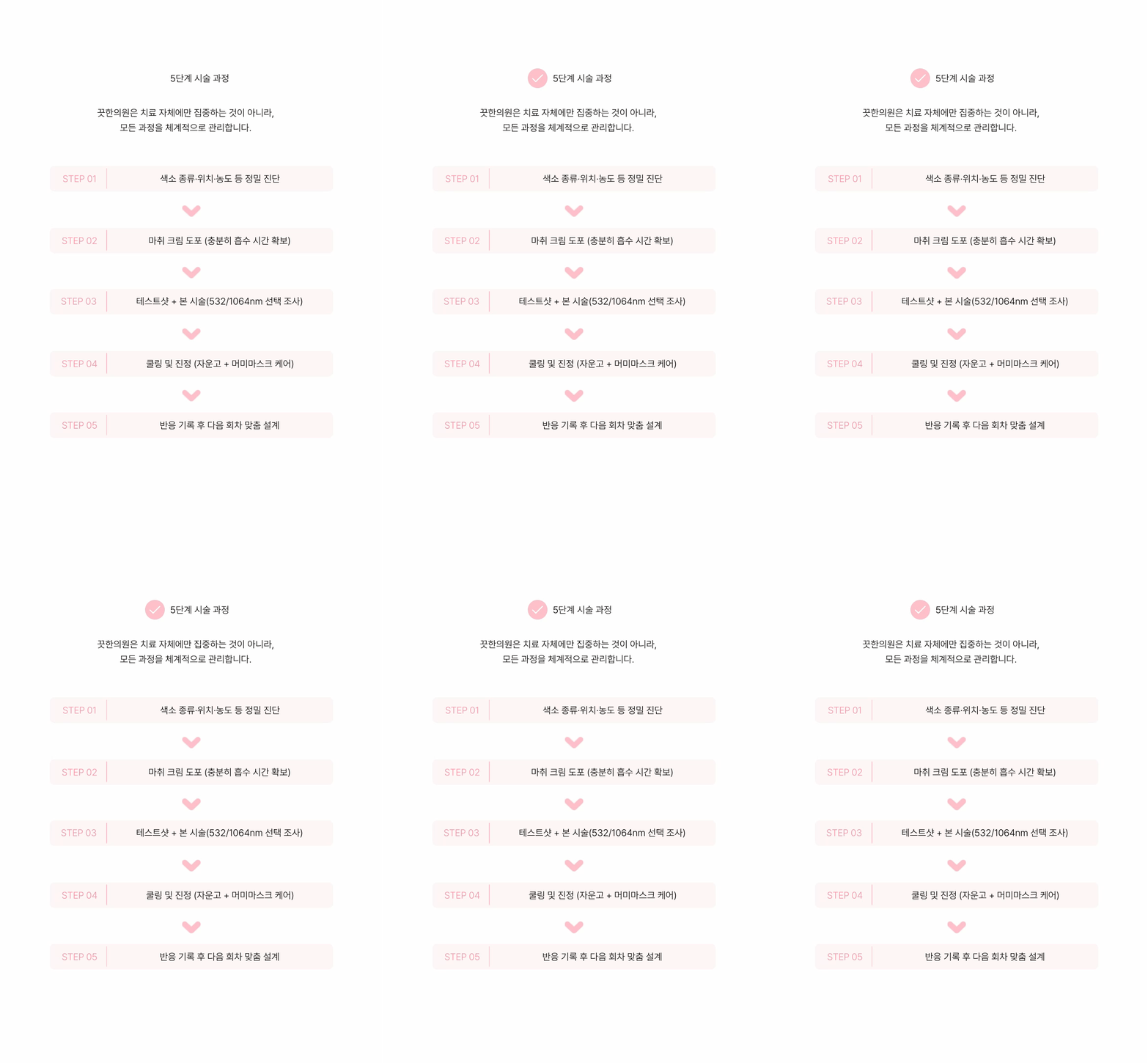
Eyebrow Tattoo Removal Procedure
STEP 1. Customized Pigment Diagnosis
Comprehensive diagnosis of pigment type, location, concentration, oxidation potential, etc.
STEP 2. Anesthetic Cream Application
Apply a sufficient amount of topical anesthetic cream to the treatment area to minimize pain.
STEP 3. Test Shot and Laser Treatment
After performing a test shot to confirm reactivity, select the appropriate wavelength (1064nm/532nm) for the procedure. Intensity can be adjusted based on the intermediate reaction.
STEP 4. Cooling and Soothing Care
Apply regenerating ointment and Jaungo soothing care to alleviate white reaction, redness, etc.
STEP 5. Reaction Recording and Session Planning
After confirming progress based on reactions, establish the next treatment strategy.
Eyebrow Tattoo Removal Pain and Aftercare
- Most clients only feel a tolerable tingling sensation after anesthesia.
- White reactions and temporary redness after the procedure typically subside within a few hours.
- Scabs or redness may occur, but they usually subside within 2-3 days.
Treatment Cycle
- Performed at 4-6 week intervals (maintain a minimum of 4 weeks interval for skin recovery and pigment expulsion).
- 3-5 or more treatments may be required depending on pigment concentration and skin type.
- If the intervals are too short, there is a risk of skin damage and discoloration, and it is effective to allow sufficient time for pigment metabolism.
Recommended for
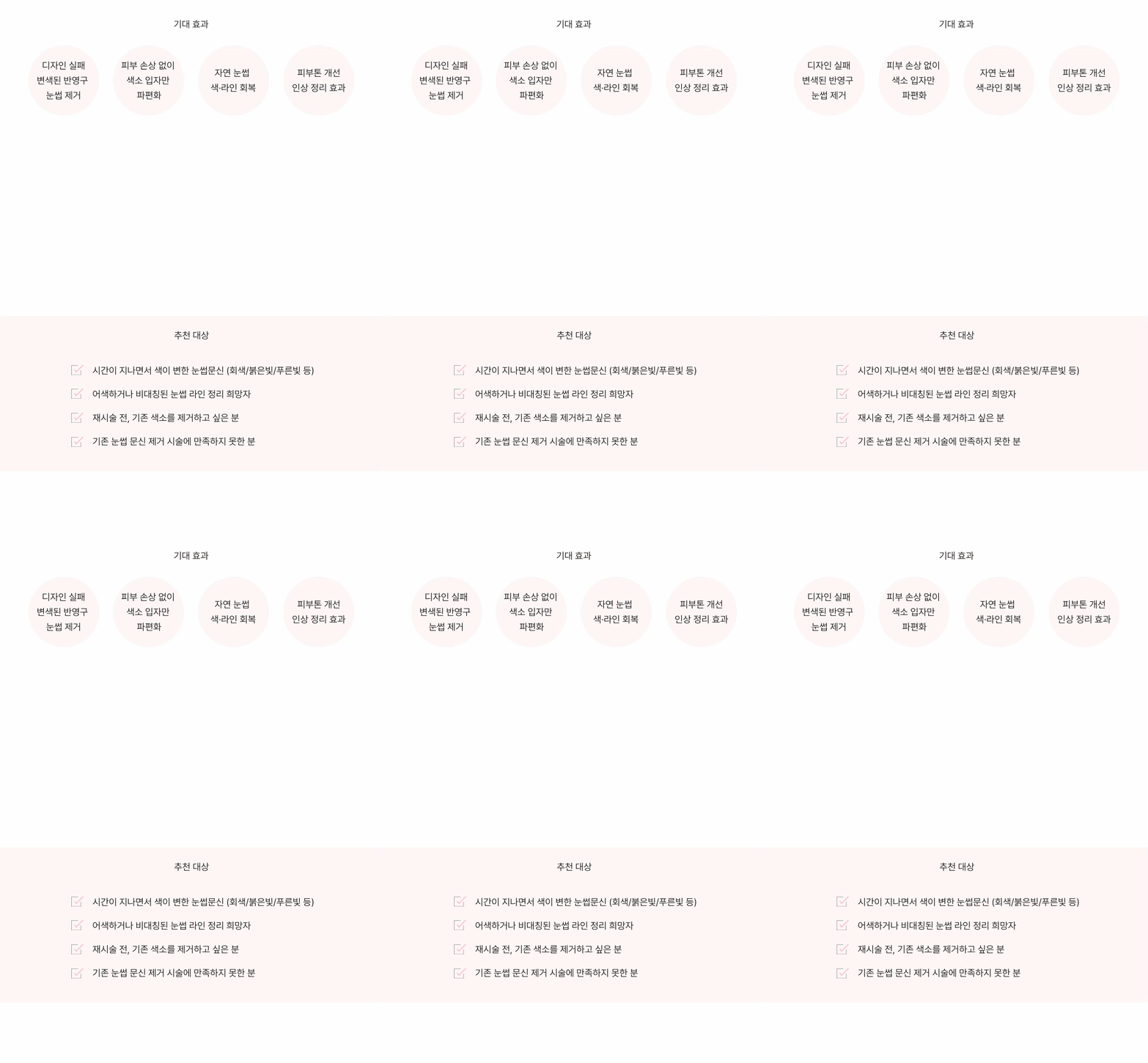
- Semi-permanent eyebrow tattoos that have discolored over time (e.g., gray, reddish, bluish).
- Those who want to remove tattoos due to an awkward or asymmetrical design.
- Those who require pigment removal for a new procedure over an existing tattoo.
- Those who wish to restore a natural appearance.
- Those who received treatment at another clinic but were not satisfied.
A Message from the Chief Director
Eyebrow tattoo removal is not a procedure that can be done by simply 'shooting' the laser.
All factors, including pigment location, depth, particle size, composition, and potential for discoloration, must be the criteria for diagnosis.
Especially in cases where unexpected reactions may occur, such as with iron oxide-based pigments, precise diagnosis and setting adjustments based on clinical experience are far more crucial than simple laser irradiation.
You should seek a clinic that not only operates the device as prescribed but also analyzes pigment components in advance and thoroughly conducts reactivity tests.
Tattoo removal is a procedure completed by 'people,' not 'machines'.
It is only when a person's clinical data, intuition, and judgment come together that safe and accurate results are produced.
As the chief director, we never take even a single eyebrow color lightly.
Accurate analysis leads to predictable results, so we personally monitor and adjust all progress from diagnosis to post-procedure recovery.
I will do my best to ensure my sincerity translates into effective results.
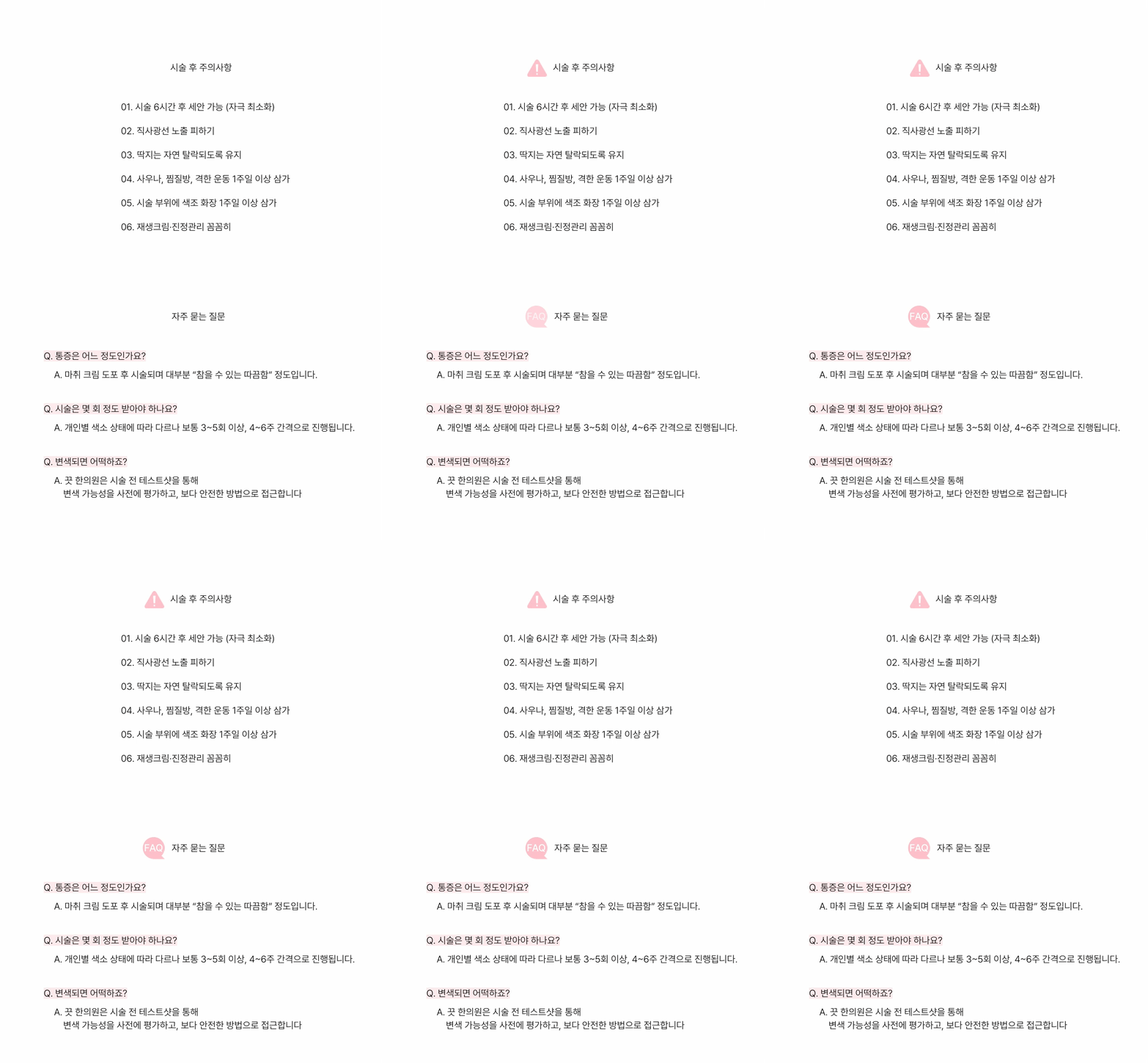
Post-Procedure Precautions
- No face washing for at least 6 hours after the procedure (to avoid irritation).
- Sun protection is essential! (Sunscreen + hat, sunglasses recommended)
- Let scabs fall off naturally (Do not pick at them!)
- Apply recovery cream consistently
- Avoid saunas, steam rooms, and strenuous exercise for 1 week.
- Eyebrow makeup (pencil, tattoo pen, etc.) should be avoided for at least 1 week.
시술 진행 순서
첫 상담부터 마무리까지의 실제 진행 순서를 확인하세요.
- 01
개개인의 상태를 고려한 맞춤 상담
- 02
시술 부위에 마취 연고 도포
- 03
개인의 눈썹 상태에 맞춰 레이저 파라미터 설정 및 시술 진행
- 04
피부 진정 및 마무리 관리
시술 기본정보
시술 시간, 마취, 회복, 유지기간을 한 번에 확인하세요.
TIME
30분 이내
ANESTHESIA
마취크림 15~30분
RECOVERY
일상생활 바로 가능
Q&A
고객님들이 가장 많이 물어보시는 내용을 모았습니다.
How soon can I get the treatment after an eyebrow tattoo?

Treatment is possible 4-6 weeks after a semi-permanent tattoo.
How many sessions should I get?
It varies depending on the depth and extent of the pigment, but we recommend multiple sessions at 4-6 week intervals.
Do I need to buy ointment separately?
There might be irritation after tattoo removal, so we provide ointment at our clinic.