withTitleLogo
top-visual-mobile
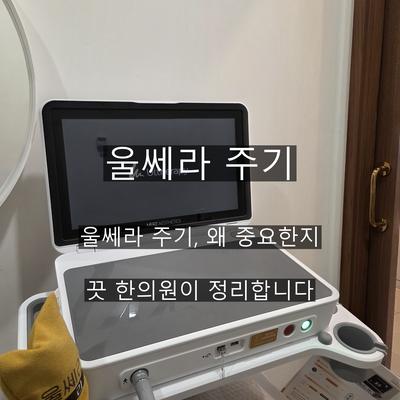
울쎄라 주기, 너무 길면 안좋은 이유?

울쎄라 주기, 너무 길면 안좋은 이유? 서울 홍대 끗 한의원

4/30/2026

서울 홍대 끗 한의원에서 진행하는 울쎄라 주기, 너무 길면 안좋은 이유? 시술 노트입니다.

The Importance of the Ultherapy Treatment Interval


When the Ultherapy treatment interval is not appropriately managed, the desired effects of the procedure might be considerably diminished.


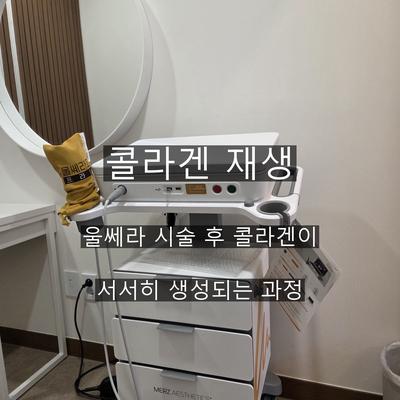
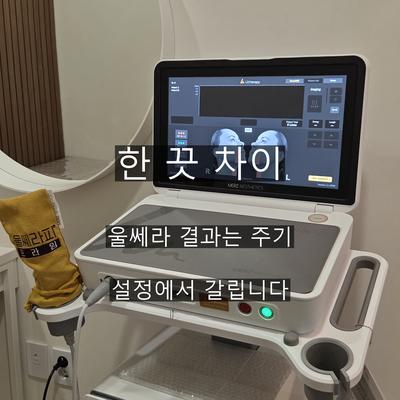
Ultherapy is a lifting procedure that utilizes high-intensity focused ultrasound (HIFU) energy, delivering it directly to the SMAS layer beneath the skin. This process aims to stimulate new collagen production.


While some lifting sensation might be experienced immediately after the procedure, the fuller benefits often emerge as collagen gradually regenerates over a period of two to three months.


Potential Issues When the Ultherapy Treatment Interval Is Too Extended


The outcomes of Ultherapy treatments are not permanent.


The collagen-generating effects typically reach their peak roughly 6 months to one year after the session, subsequently fading naturally over time.


Should the Ultherapy interval extend beyond one year, the subsequent treatment may occur at a point when collagen produced from the prior session is no longer adequately sustained.


In such instances, the treatment might feel akin to starting anew each time, potentially dispersing the effects rather than allowing them to accumulate.


Conversely, an overly brief treatment interval can also introduce its own set of concerns.


Repeated stimulation of the SMAS layer without allowing adequate recovery time might lead to accumulated tissue damage.


Kkeut Clinic generally suggests an Ultherapy treatment cycle ranging from six months to one year.


Kkeut Clinic's Approach to Ultherapy Treatment


The efficacy of Ultherapy procedures does not rely solely on the device brand itself.


Even with the same Ultherapy device, the outcomes may differ considerably based on the chosen treatment tips and the methodology employed.


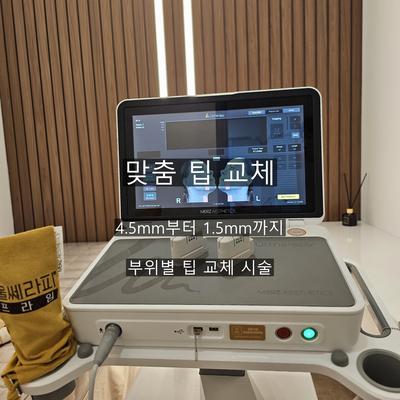
At Kkeut Clinic, alongside the standard 4.5mm tip, we utilize 3.0mm, 2.0mm, and 1.5mm tips, alternating them to suit the specific treatment area.


For delicate areas like around the eyes, shallower tips are employed. Conversely, regions with thicker fat layers, such as the cheeks and jawline, are precisely addressed with deeper tips to target the SMAS layer.


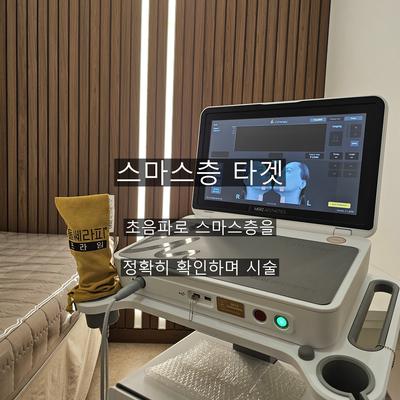
Kkeut Clinic conducts treatments by directly observing the SMAS layer on a real-time ultrasound screen, adjusting the tip angle as needed.


Without the guidance of ultrasound, there is a possibility that energy could be delivered to areas other than the intended SMAS layer during the procedure.


Accurately targeting the skin layers, which are not visible to the naked eye, is a crucial factor in achieving the desired Ultherapy results.


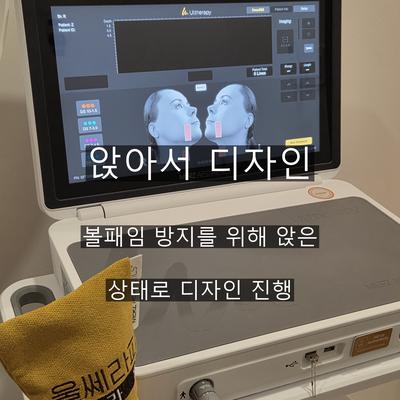
One aspect occasionally overlooked in lifting procedures is the potential for cheek hollowing.


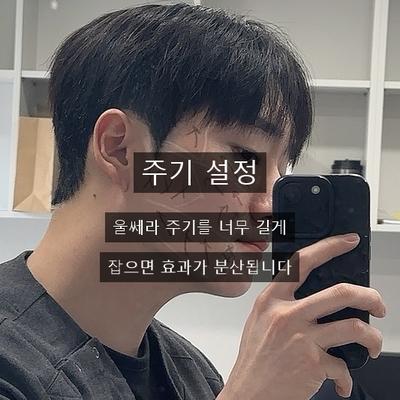
Prior to treatment at Kkeut Clinic, the planning and design phase is consistently performed with the patient in an upright, sitting position.


When design is executed solely in a supine position, the altered direction of gravity might result in outcomes that do not precisely align with the actual facial contours.


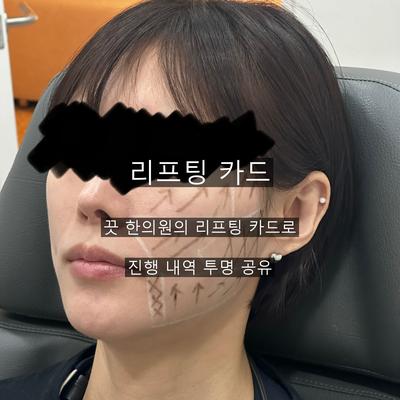
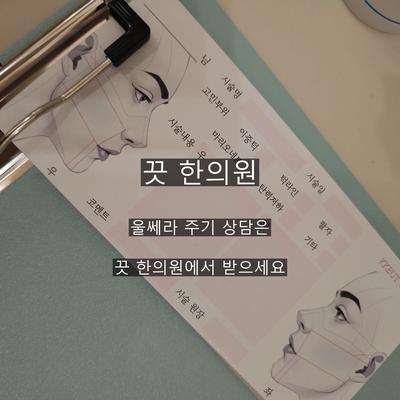
Following the procedure, Kkeut Clinic prepares a lifting card and shares it with each individual.


This document thoroughly records details such as the types of tips used, the total number of shots administered in the current session, and also indicates an appropriate timeframe for the subsequent Ultherapy cycle.


For lifting procedures necessitating cycle management, this record functions as a valuable reference point for future treatments.


Commonly Asked Questions


Q. What is the suggested minimum interval for Ultherapy treatment?


A. We generally advise an Ultherapy treatment interval of at least six months. For the effects to build cumulatively, it is beneficial to schedule the next session after the SMAS layer tissue has thoroughly recovered and the collagen regeneration process has reached its peak. At Kkeut Clinic, we customize the treatment cycle to range between six months and one year, taking into account each individual's unique skin condition.


Q. If the Ultherapy treatment interval surpasses one year, do the effects dissipate entirely?


A. Should the interval extend beyond one year, a considerable amount of the collagen generated from the prior Ultherapy session may have already diminished. While the effects do not vanish completely, it can become challenging to achieve cumulative benefits compared to adhering to a more consistent treatment schedule. Kkeut Clinic assists with cycle management through the use of a lifting card.


Q. Is it acceptable to undergo other lifting treatments during the intervals between Ultherapy sessions?


A. Yes, it is indeed feasible to incorporate other lifting treatments, such as Shurink or InMode, in between your Ultherapy cycles. Kkeut Clinic designs a comprehensive plan that integrates both the Ultherapy cycle and the timing for additional lifting treatments, aiming to maximize their synergistic effects.


Kkeut Clinic's Commitment


Kkeut Clinic offers treatments that meticulously stimulate the SMAS layer by customizing tip selections (ranging from 4.5mm to 1.5mm) for each specific facial region.


At Kkeut Clinic, we strive for satisfying outcomes by performing meticulous procedures, which involve adjusting tip angles while continuously monitoring a real-time ultrasound screen.


Kkeut Clinic aims for both safety and efficacy, integrating lifting card documentation with a systematic Ultherapy cycle management approach.


A Subtle Difference, Deliberate Care. Kkeut Clinic's approach aims for patient well-being.