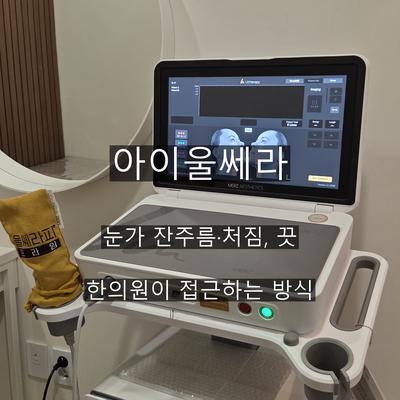


Why Eye Ulthera truly works: Improving fine lines and lifting sagging around the eyes. 서울 홍대 끗 한의원
5/5/2026
서울 홍대 끗 한의원에서 진행하는 Why Eye Ulthera truly works: Improving fine lines and lifting sagging around the eyes. 시술 노트입니다.
The Specific Application of Eye Ulthera to the Periorbital Region
The distinct characteristics of the skin surrounding the eyes are an important consideration when discussing Ulthera's application in this area.
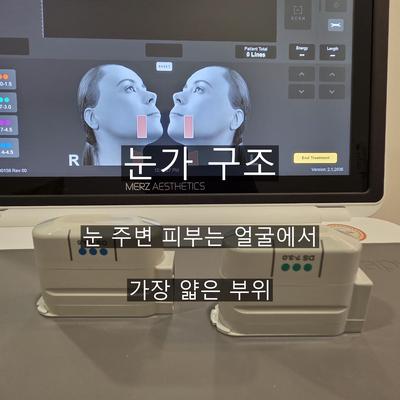
The skin in the periorbital area is notably delicate, being among the thinnest regions of the face. Due to this inherent difference in dermal thickness compared to areas like the cheeks or forehead, using conventional lifting treatment tips without adjustment could lead to an inappropriate targeting depth, which might affect the desired outcomes.

Ulthera therapy precisely delivers thermal energy into the skin at various depths through High-Intensity Focused Ultrasound (HIFU). The accuracy of the tip's depth setting is a crucial factor influencing the expected results.

The Necessity of Specialized Tips for the Periorbital Region
A common tip used for standard Ulthera procedures is designed for a depth of 4.5mm. This tip effectively targets the SMAS layer, a vital skin support membrane, in facial areas with adequate dermal thickness, such as the cheeks or along the jawline.
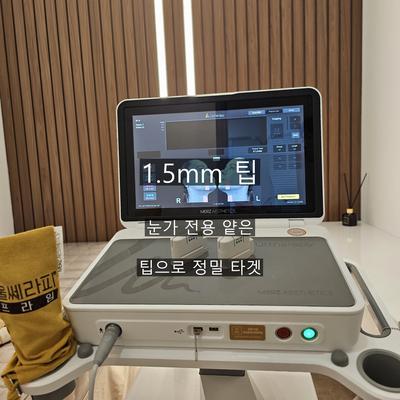
Given the inherent thinness of periorbital skin, employing a 4.5mm tip could potentially deliver energy beyond the intended anatomical plane. Therefore, specific shallow-depth tips, typically 1.5mm and 2.0mm, are required for treatments around the eyes.

At Kkeut Clinic, alongside the standard 4.5mm tip, the clinic utilizes various other tip depths, including 3.0mm, 2.0mm, and 1.5mm, depending on the treatment area. For delicate regions such as the eye contour, 1.5mm and 2.0mm tips are chosen specifically to ensure thermal coagulation points are created accurately at the appropriate depth for the local skin thickness.

Understanding SMAS Stimulation and Collagen Synthesis for Eye Area Improvement
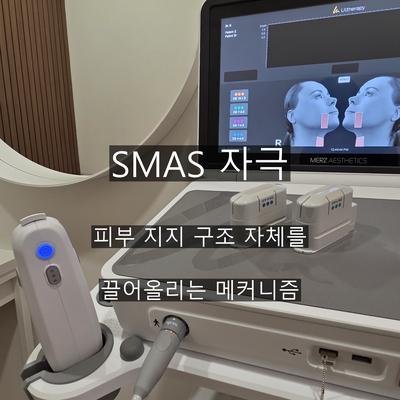
Ulthera's primary action involves directly engaging the SMAS layer, a crucial supporting membrane located beneath the skin, rather than only affecting the superficial epidermis. This SMAS layer is fundamental for maintaining facial structure; its laxity with age can contribute to noticeable eye sagging and the formation of fine lines.
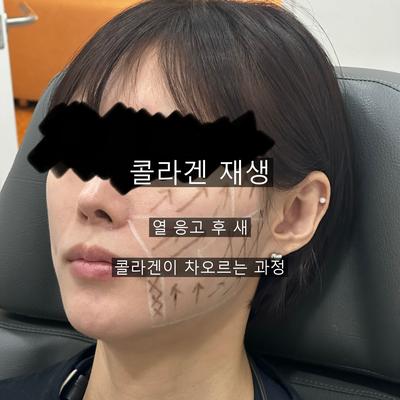
When focused ultrasound energy generates tiny thermal coagulation points within the SMAS, the body interprets this as a micro-injury, prompting a natural collagen regeneration process. This newly formed collagen helps to reinforce the attenuated SMAS structure, which can lead to a gradual lifting effect in the periorbital area.

This approach addresses the underlying structure, not just the skin surface, which may lead to concurrent improvements in periorbital fine lines and the appearance of sagging. This comprehensive mechanism highlights the relevance of Ulthera for the eye area.

Ultrasound-Guided Treatment Approach
Kkeut Clinic performs treatments by adjusting the tip angle and visually confirming the SMAS layer through real-time ultrasound imaging. Especially in sensitive regions such as the eye contour, this technique may help to improve both the precision of energy delivery and patient comfort.
In the delicate eye area, even minor depth variations can impact the targeted tissue region. Therefore, maintaining precise control over depth is important, and ultrasound guidance can aid in this regard.

Before treatment, Kkeut Clinic first performs the initial design phase with the patient in a seated position. This allows for a more accurate assessment of sagging areas as they appear under normal gravitational conditions, unlike assessments performed solely while lying down. This consideration helps in precisely addressing periorbital sagging.

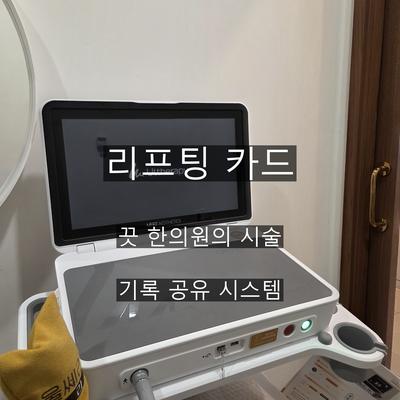
Following the procedure, Kkeut Clinic prepares a lifting record detailing the specific tips utilized, the number of shots administered, and the suggested timeline for subsequent treatments. This documentation supports a structured approach to ongoing care.

Commonly Asked Questions
Q. When are the results of Eye Ulthera typically observed?
A. The improvements from Eye Ulthera are generally not immediate but tend to become apparent gradually, usually between 2 to 3 months post-procedure, as new collagen develops. Kkeut Clinic documents the treatment specifics on a lifting card to help monitor progress.
Q. What is the typical number of sessions required for Eye Ulthera?
A. While some improvement from Eye Ulthera may be observed after one session, the necessity for additional sessions can vary based on the extent of eye sagging and fine lines. During your initial consultation, Kkeut Clinic offers recommendations regarding the suitable number of treatments and tip selections.
Q. Are there specific concerns given the periorbital treatment area?
A. Kkeut Clinic establishes the suitable depth for the delicate periorbital skin by using ultrasound imaging for direct confirmation and by employing specialized 1.5mm and 2.0mm tips. Careful tip selection and precise depth settings are considered for treatments in this sensitive area.
Kkeut Clinic's Thoughtful Approach
Kkeut Clinic aims to apply Ulthera in the periorbital region at the precise depth appropriate for the thin skin, using an alternating approach with 1.5mm and 2.0mm shallow tips.
Kkeut Clinic aims for precise SMAS layer targeting and enhanced procedural safety. This is achieved by adjusting the tip angle and monitoring treatment progress with real-time ultrasound imaging.
For ongoing care after a procedure, Kkeut Clinic utilizes shared lifting card records. This approach assists in providing systematic follow-up.
A subtle difference may lead to a meaningful change. Kkeut Clinic focuses on personalized procedures to help achieve such desired outcomes.